Nest Software Development

ONESPACE / INDUSTRIES

Different businesses. Carefully connected workflows

A warehouse, a factory, and a project team ask different questions. Start with the work that makes your business distinctive, then connect it to a dependable financial and operational foundation.

Walk us through your operation Explore the approach ↓
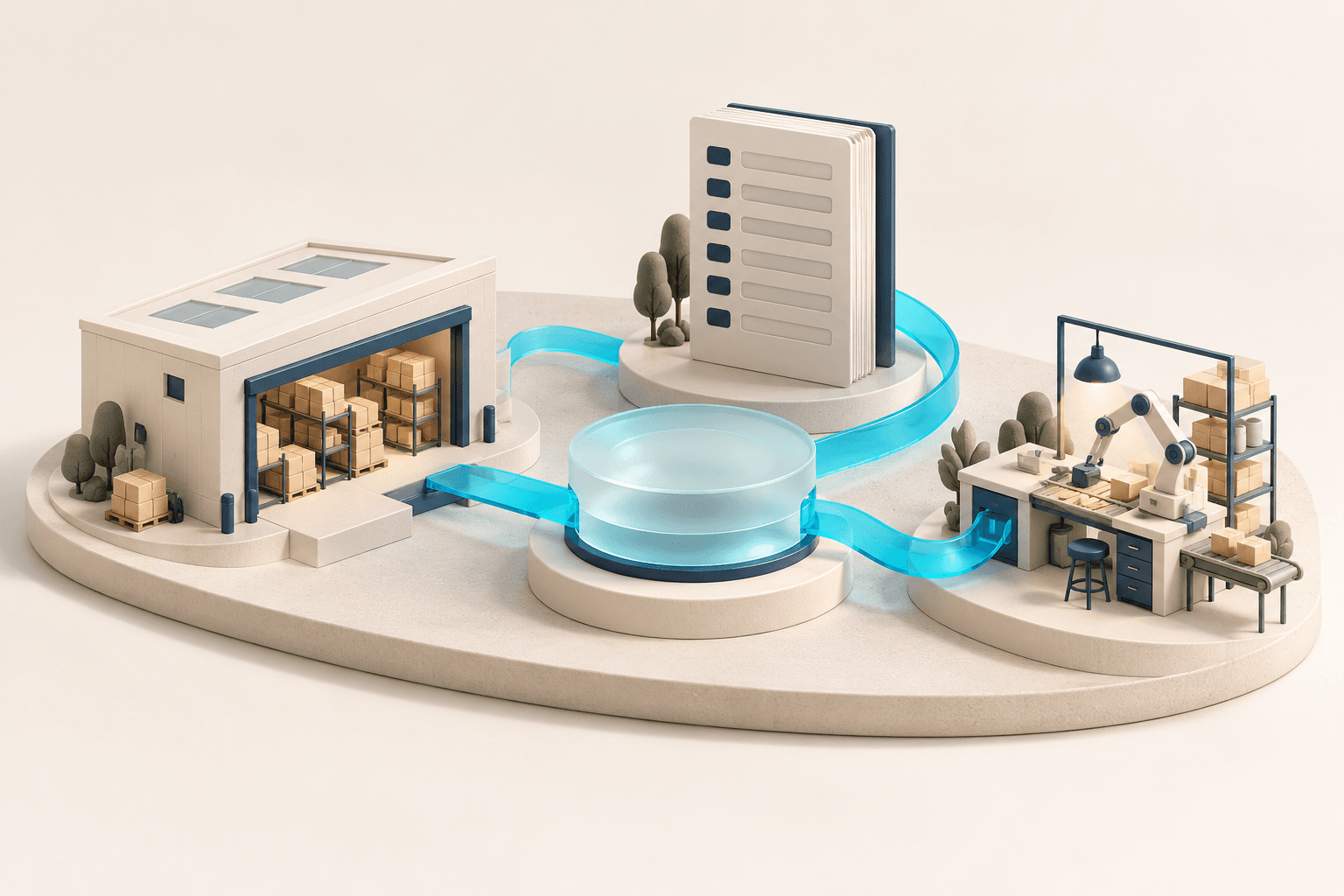
A miniature warehouse, ledger, and production station connected through a cyan hub.

THE STARTING POINT

Your industry gives us a starting point. Your operation gives us the brief.

Two companies in the same sector can have very different approval rules, pricing models, data quality, and reporting needs. We use industry workflows to make discovery concrete, then validate the details with the people who will use the system.

FIND YOUR WORKFLOW

Built around the work you do.

Trading & distribution

An order arrives across a growing catalogue. Connect price lists, purchasing, warehouses, deliveries, and collections so commercial commitments reflect stock reality.

  • Item and unit-of-measure consistency
  • Batch, serial, and warehouse visibility
  • Customer credit and outstanding balances
See how implementation works →
Manufacturing

A delivery promise depends on material availability and the work already in progress. Connect demand, bills of materials, production activity, and cost records.

  • Material requirements and purchase planning
  • Work orders, job cards, and quality checks
  • Finished goods and production cost visibility
See how implementation works →
Retail & e-commerce

Customers meet the same business in store and online. Define how catalogues, orders, fulfilment, returns, and payments move between the ERP and each sales channel.

  • Product and price ownership across channels
  • Stock and order synchronisation rules
  • Returns, settlement, and receipt requirements
See how implementation works →
Projects & professional services

Work is progressing, but the financial picture is scattered. Bring estimates, tasks, time, expenses, and billing together around a shared project record.

  • Project budgets and cost centres
  • Task ownership and timesheets
  • Milestone or time-based billing workflows
See how implementation works →
Construction & contracting

Each project carries its own purchasing, site costs, and payment arrangements. Start with the core financial and project records, then scope specialist contract workflows.

  • Project purchasing and material movements
  • Cost reporting by site or project
  • Separately scoped certificates, retention, and variations
See how implementation works →
Education & training

Administration spans enrolment, schedules, fees, and staff. Assess the fit of education applications alongside the financial system before defining the rollout.

  • Student and programme data structure
  • Fee collection and financial reconciliation
  • Application fit and role-based access review
See how implementation works →
Healthcare operations

Purchasing, stock, assets, and finance need dependable records. Clinical workflows require a separately assessed healthcare application and explicit data-access boundaries.

  • Consumables, batches, and expiry workflows
  • Department costs and equipment records
  • Clinical integrations and privacy requirements scoped separately
See how implementation works →
Hospitality, logistics & membership businesses

Reservations, shipment events, or recurring memberships may live in specialist tools. Define what stays in those systems and what should connect to finance and operations.

  • Specialist-system integration assessment
  • Billing, purchasing, and operational cost tracking
  • Clear ownership of customer and service records
See how implementation works →
01

Follow the work across departments

We walk through a representative transaction, including the exceptions. A partial delivery, returned item, changed order, or delayed payment often reveals more than a perfect demo.

  • A real transaction and its exceptions
  • The teams and approvals involved
  • The reports needed to manage the outcome
02

Separate standard fit from specialist needs

Finance, purchasing, and stock can provide a common foundation. Clinical records, construction certificates, reservations, and other specialist processes may require additional applications or development.

  • Core ERP requirements
  • Industry application fit assessment
  • Explicit integration and customisation scope

WHAT THIS MAKES POSSIBLE

Better work, in practical terms.

  1. A scope grounded in representative daily work.
  2. Visibility into specialist requirements before build starts.
  3. A phased rollout matched to operational priorities.

BEFORE WE BEGIN

Good questions. Clear answers.

Are these ready-made industry products?

These are workflow starting points for discovery, not a claim that every sector has a prebuilt OneSpace product. The proposal identifies standard features, additional applications, integrations, and custom work.

Can multiple branches or entities be included?

We assess company structure, warehouses, permissions, reporting, and intercompany needs during discovery. The design and rollout plan then reflect the entities and locations in scope.

YOUR NEXT CHAPTER

Start with what needs to work better.

Tell us where things stand, what is getting in the way, and what you want to achieve. We can shape the next step from there.

Walk us through your operation Prefer a call? +2010 2196 5445

CONNECTED THROUGH NEST

Business operations ↗Business communications ↗Cloud & hosting ↗